Marketing in 2026 is not just about selling, promoting, or advertising anymore. It is all about customer-first, creation of value, and building long-term relationships in the digital-first environment. Whatever you learn, such as SEO, Facebook marketing, paid Advertising, analytics, everything is all about core marketing concepts.
This blog describes the Core Concepts of Marketing, their evolution, and how they apply directly to digital marketing in the current scenario for students, job seekers, or businesses.
What is Marketing?
Marketing is a strategic process of understanding people’s problems, designing meaningful solutions, delivering, and exchanging value to satisfy customer needs in a way that benefits both sides. It bridges what a seller is providing with what the buyer wants, desires, and is ready to buy.
Today, with digital marketing, marketing is not just promotion; it is starting even before the moment when customer behavior, intention, and experience are researched, and long after that, with techniques like retention and relationship building. Digital marketing refers to all marketing activities that use internet-enabled technologies and digital platforms to promote their products and services. Digital marketing operates through interconnected channels and tools that enable brands to attract, engage, and convert customers.
In 2026, with the rise of AI and AI-enabled marketing tools, the scope of digital marketing is skyrocketing. The global digital marketing and advertising market is projected to reach $786.2 billion by 2026.
Why Core Marketing Concepts Matter in Digital Marketing?
Many marketing efforts fail not because of poor tools but because of weak strategy planning. Using ads, social media, and SEO without a clear understanding of core marketing concepts can result in low visibility and engagement. In fact, digital campaigns aligned with core marketing concepts see up to 2.9× higher conversion rates compared to generic ads, highlighting the importance of strategy-driven marketing
Core marketing concepts help you :
- Align digital campaigns with real customer needs
When you feature what customers want, your content becomes relevant to them.
- Improve conversion rates and engagement
Personalized messages and value-focused strategies encourage customers to interact and take action.
- Build trust and brand loyalty
Consistent and honest marketing will boost credibility, and customers might feel connected.
- Achieve sustainable, long-term growth
Build long-term success instead of chasing short-term results.
The Evolution of Marketing: Why Digital Marketing Exists Today
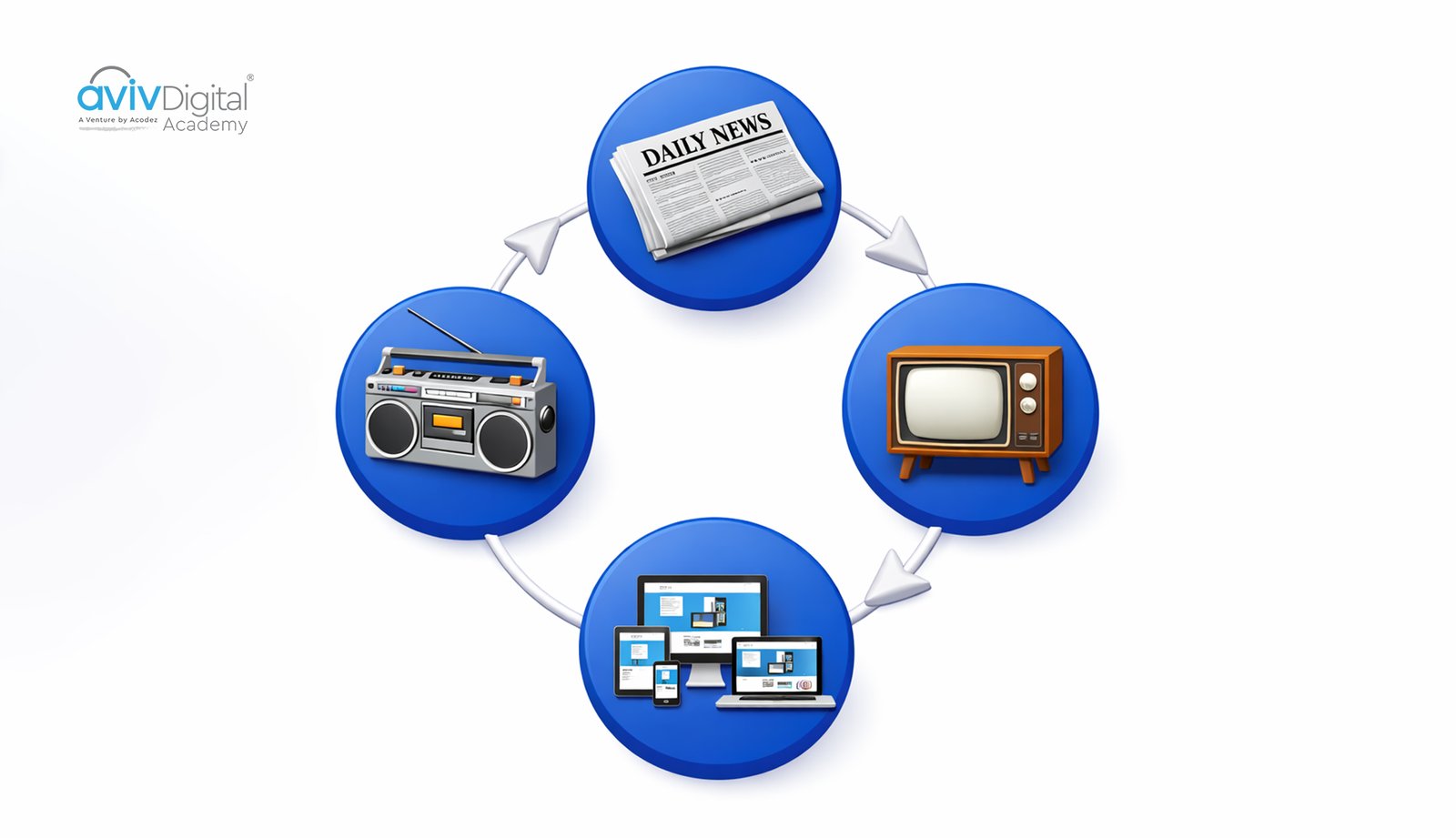
Marketing has come a long way, from ancient traders to customer-focused digital experiences. In ancient times, sellers used signs in front of their shops to convey what they sell or what services they offer. For example, a symbol of a grape cluster meant a wine seller. Today, the same logic is applied behind brand logos and app icons.
An interesting example of early advertising dates back to 3000BCE. The earliest written advertisement was found in Thebes in ancient Egypt. It contained the details of a fabric vendor and his missing slave. Along with the information of a gold reward for those who find his slave, he mentioned his store had beautiful fabrics woven according to each person’s taste. This shows the earliest native ad.
Marketing has evolved as customers, competition, and technology have changed. This evolution ultimately led to the rise of digital marketing. Today, the shift toward customer relationships and personalized experiences is also reflected in spending trends. Global digital ad spend reached$740 billion in 2025, up 12% from 2024, driven largely by relationship-focused strategies.
Production Concept
Focus: Large-scale production and easy availability
Belief: “If we make, people will buy.”
This approach fails when people have endless options
Product Concept
Focus: Better quality and more features
Risk: Marketing myopia, building products customers don’t want
This approach fails when customer needs are not properly maintained or ignored
Selling Concept
Focus: Strong persuasion and aggressive promotion
Still common. Examples include spam messages and unwanted pop-up ads.
Can help in short-term sales, but damages brand reputation.
Marketing Concept
Focus: Identifying customer needs and ensuring they are satisfied
This is the core idea behind digital marketing concepts such as SEO, content marketing, user experience (UX), and personalization.
Societal and Relationship Marketing
Focus: Ethics, sustainability, and long-term relationships with customers
Enabled by CRM tools, automation, and community-driven brands.
The 7 Core Concepts of Marketing Explained
These 7 concepts form the foundation of all marketing strategies, including modern digital marketing.
1. Customer Needs, Wants, and Demands
- Needs: Basic problems or requirements of customers
- Wants: Solutions that are influenced by culture, lifestyle, and preferences
- Demands: Wants supported by ability and willingness to pay
SEO and content marketing are effective because they work by targeting customer demands, rather than interrupting customers with unwanted ads.
2. Products, Services, and Experiences
- Products are not only physical goods.
- They include online courses, apps, software, digital services, and even communities.
- User experience is given the most importance while designing a product.
3. Value, Cost, and Satisfaction
- Value: The benefits customers gain through the product or service
- Cost: Includes the expense of money, time, effort, and personal data
- Satisfaction: It happens when the product or service meets user expectations
In digital marketing, easy-to-use interfaces, fast-loading pages, useful content, and easy navigation are the factors that make the user experience pleasant.
4. Exchange and Transactions
Marketing is about exchange. When a shopkeeper gives us a free sample, we give our time and attention. In the digital world, data is the currency.
Digital exchanges include:
- Email address for a free guide
- Attention for valuable content
- Payment for online services
5. Relationships and Networks
Modern marketing focuses more on retaining existing customers than gaining new ones. By keeping existing customers, a brand can boost its credibility, and it will help in acquiring new customers.
Brands may conduct campaigns and loyalty programs, use emails and CRM tools to build a community, and make customers feel connected.
6. Markets and Segmentation
Successful marketers plan strategies tailored to the right audience. Identifying your target audience is the primary step in digital marketing. Digital and AI tools allow marketers to target people based on age, location, interests, and behaviour, with many teams also using humanizing tools to ensure their AI-generated content feels personal before it reaches the audience. Segmented campaigns, powered by these targeted digital tools, can deliver up to 760% more revenue than non-segmented campaigns, showing how important audience identification and personalization are for effective marketing.
7. The Marketing Concept
Marketing concept states that the success of a business depends on how well brands understand their customers and deliver better satisfaction than competitors. This concept is the logic behind :
- SEO
- Content marketing
- Conversion rate optimization
- Personalization
- Data-driven strategies
Marketing Concept vs Selling Concept
| Aspect | Selling Concept | Marketing Concept |
| Focus | Product-first | Customer-first |
| Promotion Style | Push promotion | Pull through value |
| Time Orientation | Short-term sales | Long-term relationships |
| Growth Approach | Aggressive tactics | Trust-based growth |
The Marketing Mix in the Digital Age (4Ps and 7Ps)
A company shapes its offer by thinking through what it builds, how much it charges, where it shows up, and how it talks to buyers. Online spaces shift those choices – fitting tools and habits people use when they browse, click, or buy from screens.
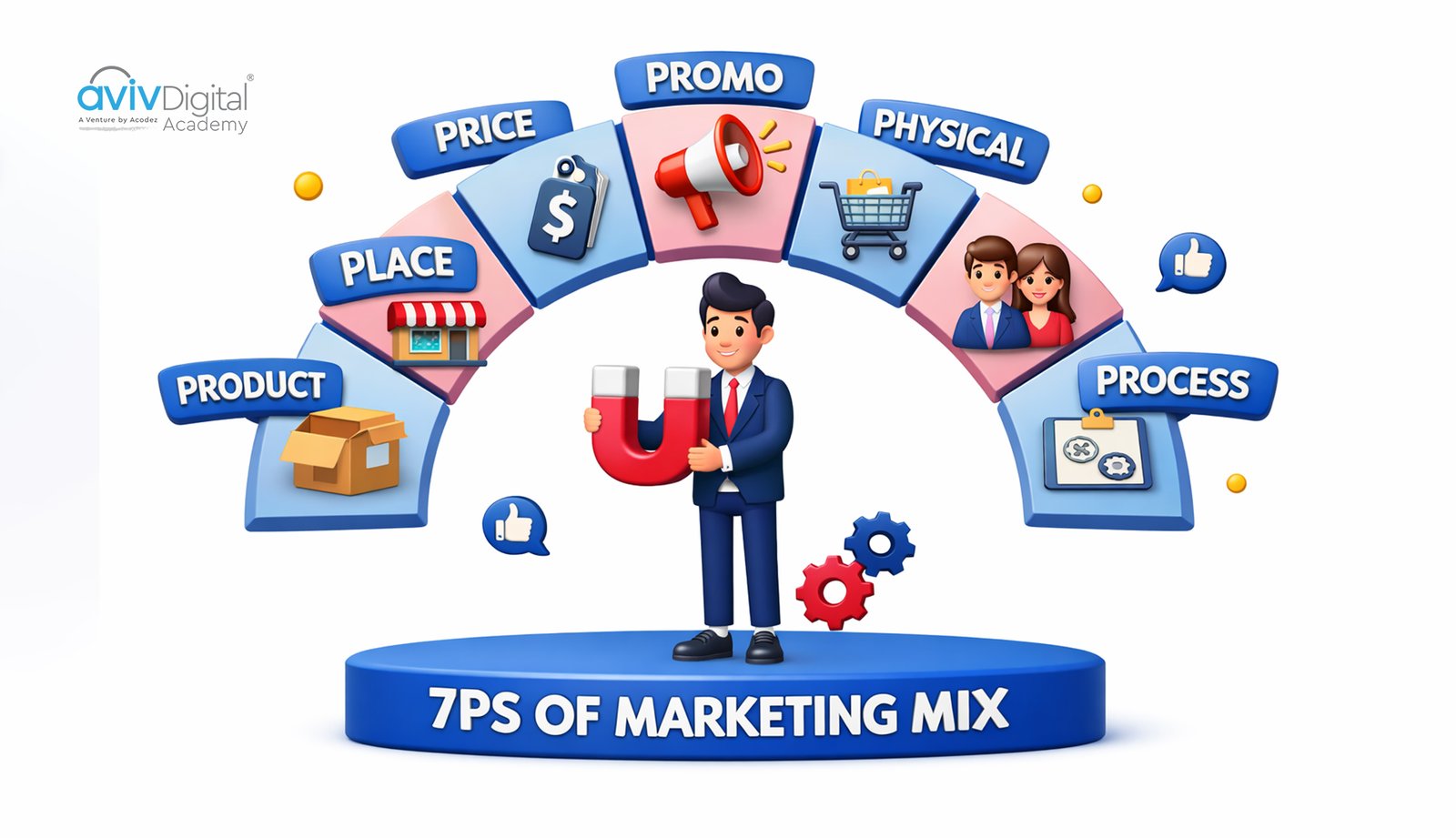
The 4 Ps Of Digital Marketing
Product
Floating through today’s tech spaces, what counts as a product goes way beyond things you can touch. Think websites that flow smoothly, classes you join from your couch, tools that live in the cloud – none of them take up shelf space. Apps appear with a tap, learning happens without classrooms, and programs run without disks. Even though you move around, a site becomes part of the offering. These pieces shape what people actually use every day.
Price
What something costs in online marketing usually ties to its perceived worth, yet rivals’ rates matter just the same. Because shoppers click around to check costs, companies need to show exactly what makes their fee fair.
Place
Where a customer meets a product shapes their experience. Think of it less as location, more as a connection point – sites on the web, tools on phones, digital storefronts, spaces where buying happens online.
Promotion
Starting online means showing worth by using tools such as search rankings, sponsored posts, messages sent straight to inboxes, alongside activity on platforms where people connect. Reaching folks happens when these pieces work together quietly behind screens.
The extended 7Ps of Digital Marketing
People
Behind every customer experience are those working quietly – team members, writers crafting messages, and helpers offering guidance. Each voice adds color to how a brand feels. Not just faces but forces that tilt impressions one way or another.
Process
A customer might begin at sign-up, then glide into onboarding without pause. Moving forward, they reach checkout – often quiet, guided by messages that arrive just in time. Each stage links behind the next, like footsteps on a path rarely noticed. Smoothness hides effort. What matters is motion without snag, friction worn thin by design. Behind it all, words arrive when needed, not before, not after.
Physical Evidence
Floating out there without shape or weight, digital goods rely on proof people can believe – comments from past buyers, snapshots of clean interfaces, nods from safety seals. Confidence grows when strangers say it worked, when screens look tidy, when locks appear near checkout fields.
How to Apply Core Marketing Concepts in Digital Marketing?
1. Research Your Target Market
The first step of marketing is identifying the target audience. Use analytics, keyword research, surveys, and social listening to understand their problems, interests, and online behavior.
2. Define a Strong Value Proposition
Clearly communicate what makes your product or service stand out and why customers should choose you over competitors.
3. Align Channels With Customer Needs
Use different digital channels for different purposes. Use SEO for awareness, email for nurturing, and ads for quick conversions.
4. Build Long-Term Relationships
Use CRM tools, automation, emails, and loyalty programs to build a community and retain customers.
5. Measure and Optimize
Track key metrics like customer satisfaction, retention, conversion rates, and lifetime value. Use this data for better planning and decision-making.
Why Core Marketing Concepts Matter for Careers
Digital marketing is a daily growing industry. The tools and platforms evolve quickly, but the core concepts of marketing remain the same. For digital marketing students and professionals, mastering the core concepts of marketing is essential for a sustainable career.
Employers prefer strategic thinkers
Modern employers prefer marketers who can think strategically, not tool operators.
Strong fundamentals help you adapt to new platforms
New technologies emerge regularly. If you have mastered the core concepts of marketing, learning a new tool becomes easier as you already know core concepts such as customer needs and segmentation.
Core concepts accelerate long-term career growth
Professionals who mastered core concepts can grow into roles such as strategist, manager or consultant. Core concepts help you grow from entry-level to high-paying decision-making and leadership positions.
Conclusion
Digital marketing isn’t about tools, tactics, or platforms; it’s about people. When your strategy is based on core marketing principles, every step you take in the digital dimension has purpose, not just interest. Rather than running campaign after campaign, marketers build experiences that address real customer needs. These basics are what allow companies to earn trust, lift engagement, and produce reliable results across channels.
Aviv Digital Academy is one of the leading Digital Marketing Course in Calicut. We offer a wide variety of globally recognised certification programs, including SEO, SEM, SMM, Email Marketing, and Inbound Marketing courses. For more details, Contact us at: +91 8156998844
Frequently Asked Questions
1. What are the core concepts in marketing?
The core concepts of marketing every marketer should know are the fundamental principles, such as customer needs, value creation, segmentation, and relationship building. These concepts help in understanding how businesses attract, engage and retain customers.
2. Are core concepts in marketing useful for beginners?
Beginners who understand core concepts find it easier to master advanced topics such as SEO, ads, social media, and analytics.
3. Do core marketing concepts change over time?
Digital marketing tools and platforms change over time due to constant technological upgradation. Core concepts of marketing remain relevant all time.