Any time a person searches on Google, there’s a quick bit of work happening behind the scenes as the platform checks which ads fit the query. It is guided by something called “Quality Score,” and once you understand how it works, the platform stops feeling like a mystery. Quality Score is not complicated if you look at it from a user’s point of view. Google wants searchers to find useful results. If your ad feels irrelevant or misleading, Google holds it back. Understanding this one concept early can save months of trial and error. Many beginners adjust bids or budgets when results drop, but the real issue is usually the Quality Score. Once it improves, you get better results at a lower cost. The best digital marketing course in Kochi can make these basics much easier to grasp. And this blog will take you through the idea step by step, keeping everything simple enough to follow as you learn.
What is Quality Score
Quality Score is Google’s rating that tells you how closely your ads match the searcher’s intent. It is basically Google’s report card for your ads. It’s calculated on a scale of 1-10. A higher score shows the ad is relevant and useful. And a lower score means there are gaps in your setup that need attention. You can think of Quality Score as a performance indicator. It highlights how strong your keyword, ad copy, and landing page connection is. When all of these work together, the performance improves. If your keyword is clear but your ad or landing page feels off, the score goes down. But this isn’t just about getting a good grade. Your Quality Score has real financial consequences, since it directly impacts cost per click (CPC), ad rank, and overall ROI. While it’s not an instant penalty, but a sign that something in your campaign needs to be changed. This rating is not fixed. If users click your ads regularly, the score will rise. But if they ignore it or leave the landing page quickly, the score falls slowly. The more consistent you are and the relevant the content you produce, the stronger your score becomes.
What Quality Score is Based On
Google considers three factors to determine the Quality score. You need to know how it’s calculated to understand how it affects your ads
- Expected CTR (Click-through rate): It simply tells how likely it is that someone will click your ad. Google looks at the keyword and checks how well the ad message matches common search behaviour. This percentage is Google’s prediction about the percentage of users who will click your ad out of all the users who see it.
- Ad relevance: It is Google’s way of checking whether your ad really belongs to the keyword you’ve chosen. It highlights how well your message matches what the user hopes to find. Focus on their actual search and avoid adding keywords that don’t fit what you’re offering.
- Landing Page Experience: Landing Page Experience is about what happens after the user clicks your ad. If the page loads slowly, feels confusing, or does not offer the information that the user expects, the experience becomes negative.
Together, these factors shape how Google views your ad’s overall quality. When they align, your score rises naturally, and your campaign becomes more efficient.
Types of Quality Scores
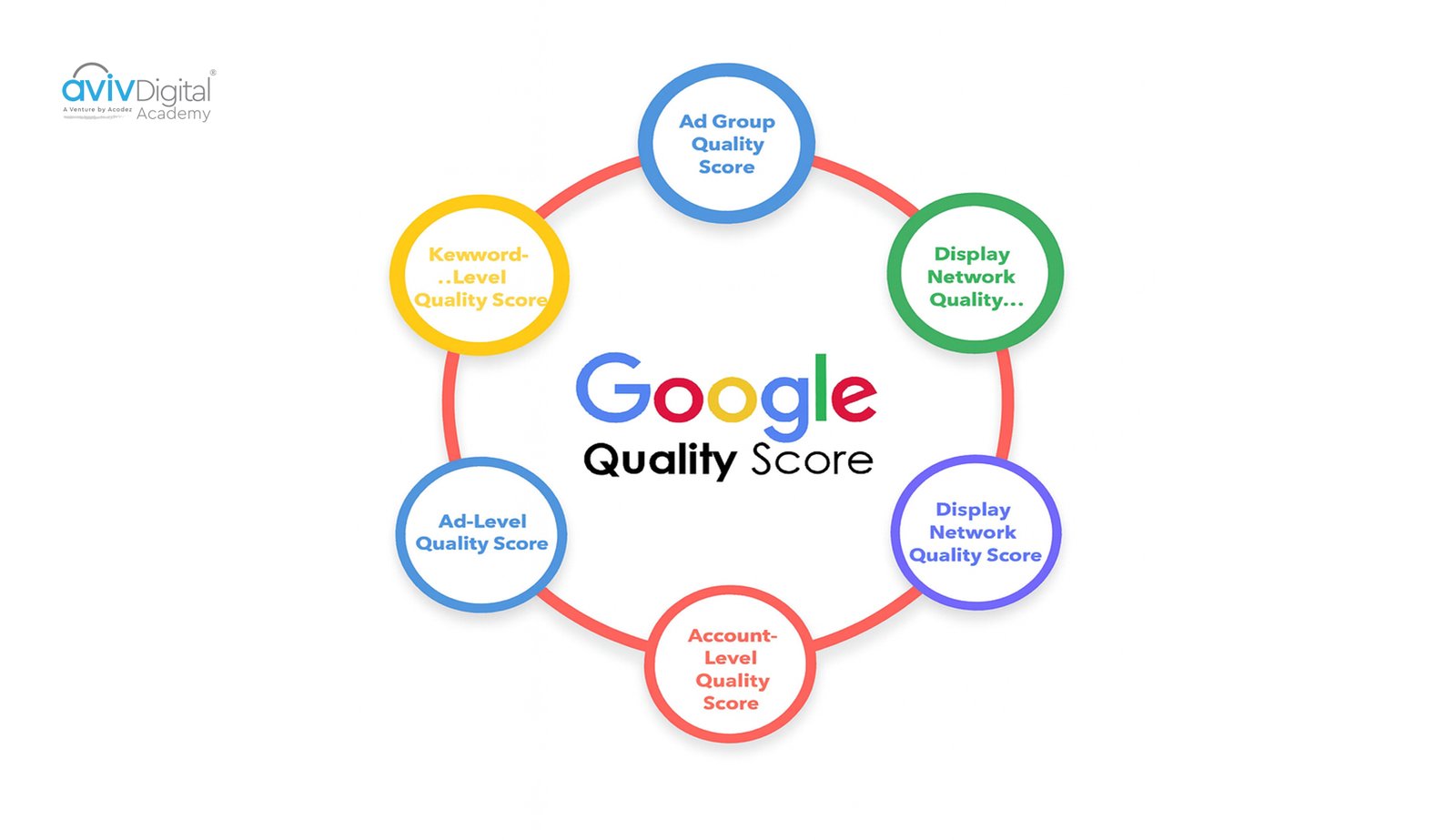
Keyword-Level Quality Score
This is the most common score you notice in your dashboard. It tells you whether a specific keyword is relevant to your ad and landing page. Keyword-level scores matter because they directly determine your costs and ad positions for each search term you’re targeting.
Ad Group Quality Score
Google doesn’t display an exact Quality Score at the ad group level. Ad groups contain many keywords. When you look at the combined performance of all those keywords, you get the ad group level score. If some keywords perform well but others do not, the average score might drop.
Account-Level Quality Score
Your account level Quality Score reflects your overall history with Google Ads. Good performance over months or years builds trust. Poorly managed campaigns can weaken this level. A high trust score gives your future campaigns a slight advantage.
Landing Page Quality Score
This focuses on the page users land on after they click. Google checks whether the page loads well, answers the user’s question, and feels trustworthy. A poor landing page can drag down performance even if your keywords and ads look fine.
Ad-Level Quality Score
This score applies to individual ad creatives rather than keywords. It measures how well a specific headline and description connect with what users are searching for and how often that ad gets clicked. More relevant ad text helps this score.
Display Network Quality Score
With the Display Network, your ads show up on various sites, so Google measures relevance differently. It checks if your creative fits the setting, if the landing page matches what the ad promises, and how people respond when they see it. Doing it properly helps lower costs and boosts placement on the network
Out of all these types, Google only displays the keyword-level Quality Score in your account. The others play a role behind the scenes, even though you won’t find them listed in the interface.
How does Quality Score Affect Google Ads?
Quality Score affects more than people think it does. It quietly shapes cost, visibility, and results.
- Cost Per Click (CPC): As your Quality Score gets better, you’ll usually see a drop in CPC. Google reduces the amount you pay when your ad matches search intent more closely, making your budget last longer.
- Ad Rank: Ad rank decides where your ad appears among other advertisers. It’s not only about your bid. Quality Score affects this ranking significantly. Someone with a smaller bid but a stronger Quality Score can rank above a competitor who is spending more.
- Ad Visibility: When your Quality Score is strong, visibility improves. Google prefers ads that line up well with what users want, so they appear more consistently.
- Campaign Performance: Better Quality Scores often translate to higher conversions. When people find an ad useful, they click, explore, and take action. This makes the entire campaign more cost-effective.
The data shows that ads with scores around 9 or 10 often reach much higher CTRs, while very low scores struggle to get attention. It’s a simple example of the impact Quality Score has on your results.
How to Improve Quality Score
Quality Score tends to improve slowly. It responds best when you keep refining things bit by bit.
- Write Clear and Focused Ads
Your ad should match what the user is looking for. Headlines must feel direct. Descriptions should answer the person’s intention. Avoid using generic words because they make the ad less trustworthy.
- Organize Your Ad Groups Properly
Ad groups work best when the keywords inside them are tightly related. Small and focused groups perform much better than large groups filled with unrelated terms. This helps Google understand your theme clearly.
- Identify High-Intent Keywords
Choosing keywords that reflect what the user is genuinely searching for makes your campaign run more smoothly. When the terms show clear intent, they bring in people who already have a goal in mind. This usually leads to better clicks and steady growth in your Quality Score.
- Add Negative Keywords
Negative keywords help you avoid searches that do not fit your offer. Removing that kind of traffic keeps your ads focused on the right audience and prevents wasted impressions. As your targeting becomes more accurate, your Quality Score often improves as well.
- Use Relevant Landing Pages
Your landing page needs to follow through on what the ad promises. If someone clicks expecting something specific, they should see it immediately without hunting around. When the ad highlights a particular product, the page should display it clearly and without extra steps. Removing external links from landing pages can improve conversion rates by up to 28%, which shows how important it is to keep the visitor focused on the action you want them to take.
- Improve Loading Speed
Loading Speed affects user behavior. Slow pages make people leave quickly. Faster pages create positive engagement. Simple optimizations like compressing images or reducing heavy scripts can help.
- Test Multiple Ad Variations
Your first attempt at an ad doesn’t always hit the right note. Testing a couple of different versions helps you notice what people respond to. The ads that get more engagement slowly gain more visibility, which supports your Quality Score over time.
- Conduct A/B Tests
A/B testing is simply trying two options and seeing which one your users prefer. Even a tiny difference in the headline or structure can make people interact differently. These small wins add up over time and can help your Quality Score move steadily.
Conclusion
Understanding Quality Score changes how you approach Google Ads completely. It stops being a guessing game and becomes a system you can actually control. Better scores mean lower costs and better positions. It’s that simple. Improving Quality Score is mostly about doing the basics with a little more care. Clear ads, pages that load on time, and keywords that reflect what the user actually wants make a bigger difference than they seem to at first. You try different ideas, keep the ones that feel right, and adjust the rest. And the interesting part is that even a small increase in Quality Score can help more than it looks. One extra point across several active keywords adds up over time, especially when the clicks start coming in. Campaigns perform better when they match the user’s intention, and that’s the idea worth carrying forward.
Aviv Digital Academy is one of the leading Digital marketing course in Kochi. We offer a wide variety of globally recognized certification programs that include SEO, SEM, SMM, Email Marketing and Inbound Marketing courses. For more details, Contact us at: +91 8156998844
Frequently Asked Questions
How to calculate a Quality Score?
You don’t calculate it manually. Google reviews your expected CTR, ad relevance, and landing page experience, then gives keywords a score from 1 to 10 based on those signals.
What is a good Quality Score?
Anything above is good. Scores between 8 and 10 mean you’re doing really well. If you’re repeatedly seeing scores below 5, that’s a red flag that needs immediate attention.
Is Quality Score visible for every keyword?
Most keywords show it, unless they are too new or rarely searched. You can view it inside your Google Ads account by enabling the Quality Score column