White label SEO is a model where an agency sells and manages SEO services under its own brand while a specialist provider handles execution, technical audits, content, link building, local SEO, and behind the scenes. The client only ever sees the agency; the provider has no direct contact. It differs from a referral because the agency keeps the account, the invoicing, and the margin.
You land a new agency client, finally, but the account needs SEO, and nobody on your team specializes in it. Hiring takes weeks, costs six figures a year in salary and benefits, and you’re already overbooked. At the same time, you’ve seen other agencies win more credits without building caps. That’s where white label SEO comes in.
White label SEO is a model where a specialist provider handles the actual execution while the agency sells and presents the service under its own brand, delivering results without the client ever seeing the provider’s name. In this complete guide, we’ll walk through how the model works, what you should expect from a white label SEO engagement, what it costs, and how to build a client report that proves your value. The reason we cover both services and reporting in one piece? The client never sees your provider, only you. Reporting is the only tangible proof you delivered what you promised, which is why it deserves a deep section of its own.
What Is White Label SEO?
White label SEO is an outsourcing model where an agency resells SEO services under its brand. A specialist provider does the tactical work, technical audits, content creation, link building, and local SEO, while the agency manages the relationship, sets strategy, and owns everything the client sees.
The key difference from a referral model is that the agency keeps the account, handles invoicing, and presents work under its own logo. The provider remains invisible to the client except through the agency’s deliverables. You may also hear the term “SEO reseller,” which captures the same model: the reseller (your agency) markets and sells the service, handing off execution to a white label provider. Delivery can be fully managed or à la carte: your partner may take full ownership of an account, or you may pick off specific services like keyword research or content production.
How White Label SEO Works
The model hinges on a clear three‑party structure. The client sees only one face, your agency, while work happens behind the scenes with the provider.
1. Onboarding: Once you take on a client, you brief your provider on goals, timelines, and brand voice. They run a baseline technical and competitive audit on your client’s property and deliver a month‑one roadmap.
2. Strategy & Execution: The provider implements the agreed plan: fixing site speed issues, optimizing key pages, building topical content, executing outreach for links, and handling local citations. All execution is done under confidentiality; the client never receives raw work files or tool screenshots.
3. Reporting: At the end of the month, the provider hands over clean, branded data summaries for you to turn into client‑facing reports.
4. Review & Adjust: A short agency–client call reviews progress. The agency translates the provider’s insights into business-value language, explains what changed, and plots the next steps, without exposing internal conversations.
The key: you remain the agency of record. The provider’s job isn’t to have a direct line with the client; it’s to make sure your agency looks like the hero.
What’s Included in a White Label SEO Service
A good white label engagement isn’t one generic “SEO package” thrown together. Look for specialists who break everything down into clear deliverables:
- Technical SEO: Site health audit, schema markup, speed optimization, crawl access setup, and monitoring of indexation problems.
- Keyword Research & Mapping: Researching main and long‑tail terms, mapping them to the most relevant pages, and prioritizing a roadmap focused on credible opportunities.
- On‑Page Optimization: Title and meta‑description optimization, heading structure, internal linking strategy, and content emphasis on key topics.
- Content Production: Writing (or overseeing edits) of pillar content, blog posts, landing pages, and FAQs that speak to client audiences and target keywords.
- Link Building / Digital PR Outreach and earning of niche‑relevant backlinks, with a focus on relevance and safety rather than quantity alone.
- Local SEO: NAP consistency checks, local citations, Google Business Profile support, and local keyword targeting.
- Reporting Monthly: performance reporting that’s clean, clear, and branded; you can drop provider branding before sending it to the client.
Depending on the model, you may get one or all of these as fully cross‑supplied services. Choose based on your current capacity and where your team’s edges sit.
Why Agencies Use White Label SEO
Cost savings on staffing
Severely hiring a full‑time SEO specialist today is an expensive, long‑term bet. If you’re based in India or another APAC market, you’re paying in dollars but competing for global clients at US/UK rates; the margin pressure is real. Building an in-house SEO team can exceed $300,000 a year in combined salaries before tools and overhead, with the average US SEO specialist salary around $86,000 and an average cost-per-hire near $4,700- good, concrete numbers to drop into your “Cost savings on staffing” section
Elastic capacity
Seasonal spikes, a sudden wave of leads, or a new service line don’t require a hiring freeze. Scale up or down month to month without changing headcount, something flat salary structures can’t match.
Access to specialist talent
One generalist hire rarely has deep expertise in technical SEO, content strategy, and outreach. The right white-label partner brings a team of technical auditors, writers, link builders, and local SEO specialists, each working at the top of their craft.
Focus on what matters
Your time is better spent on client relationships, strategic planning, and business development. Let the execution side run in parallel so you can win more credits and grow without bottlenecks.
White Label SEO vs In‑House vs Freelancers
| Model | Control | Cost | Flexibility | Best For |
| In-house | High | High (salary, benefits, taxes) | Low (fixed team size) | Agencies with large, consistent SEO needs |
| Freelancers | Medium–High | Medium (hourly or per-project) | Medium–High (easy to hire or replace) | Small projects and occasional SEO work |
| White Label | Medium | Low (retainer-based, scalable) | High (elastic capacity) | Most agencies, especially those with variable workloads |
Most agencies end up blended: strategy and client contact stay in-house, while delivery capacity is white‑labelled to handle volume without permanent hires.
Why Reporting Is What Makes the Model Work
Hiring a partner doesn’t absolve you of accountability. Your client has a budget and expectations; they need to see progress. Since they never see your provider, the report is the only tangible proof you’re doing what you say you are. You’re essentially the connector between their business outcomes and the provider’s work.
Investing time into a clear, well‑explained reporting setup isn’t a nice-to-have; it’s what prevents “What am I actually paying for?” churn. That question tends to surface early: roughly 43% of B2B churn happens within the first 90 days, before the work has had time to show a single result, which means the report often has to carry the relationship before the rankings do. And when accounts do leave, it’s rarely the SEO itself; lack of communication is the reason cited by 28% of departing clients, ahead of missed deadlines or team turnover. Losing a resold account after two or three months rarely covers acquisition cost — acquiring a new client typically costs 5 to 25 times more than retaining an existing one. Strong reporting protects your margin by keeping the client aligned and renewing.
That’s why we dedicate the rest of this guide to white label SEO reporting: how to structure it, what to include, and how to make it sell itself.
What Is White Label SEO Reporting?
White-label SEO reporting is a performance report that covers organic traffic, keyword rankings, and content performance, presented entirely under the reselling agency’s branding, with no visible trace of the underlying tool or provider. It’s typically sent monthly and is the primary evidence a client sees that the work is being done.
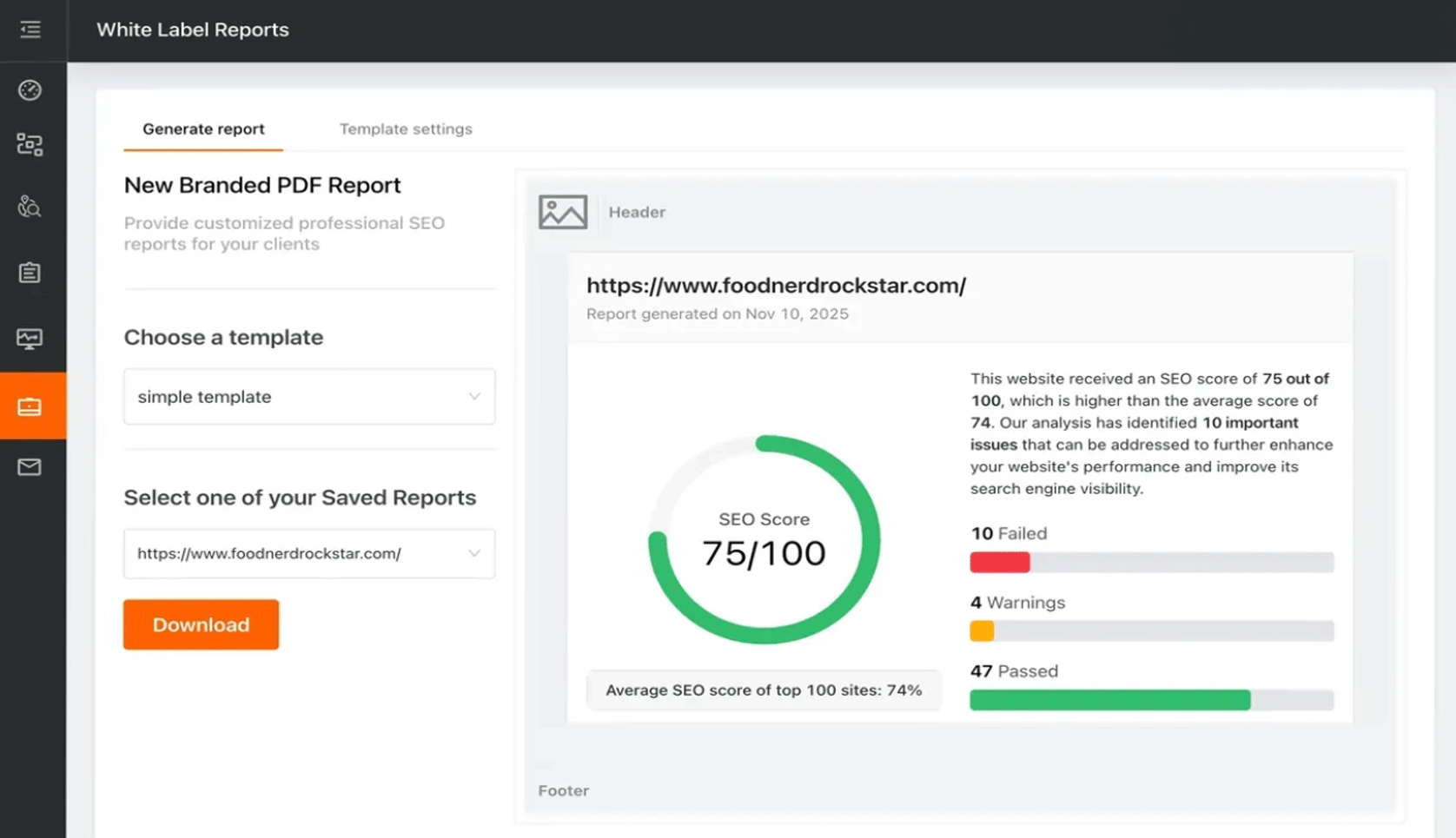
White label reporting is the presentation of client performance metrics under your own brand, without any visual trace of the underlying SEO tool or provider. It’s what you hand over at the end of each month, each quarter, or the agreed cadence. It needs to look like something your agency produced, not a raw export.
In the context of a white label relationship, the report is more than a status update. It’s the evidence that your provider’s work is translating into real signals. It’s also your shield against client doubts or “what are you charging for?” questions.
What to Include in a White Label SEO Report
Cover & branding
Start with a clean cover that uses your agency’s colors, logo, and tone. Include:
- Report title
- Date range (e.g., April 1–30, 2026)
- Client branding lines or social handles if relevant
No matter which backend tool you use, the visual layer must be fully yours.
Executive summary
A one‑page summary written in plain language:
Give the client the big picture in three sentences or fewer: “Overall performance improved vs. last month. Three core pages are seeing stronger organic traffic. The e‑commerce homepage rank for ‘shoe shop online’ moved from position 12 to 7, and conversion‑tracked quarterly goal performance has near‑aligned with expectations.”
Quick wins and immediate notes: “Local SEO citations were updated; a key technical issue with page speed (< 2s mobile) was resolved, improving Core Web Vitals.”
Organic performance metrics
Support the story with clear metrics:
Organic traffic: Improvement or decline in sessions (non‑branded is important, but branded insights help with brand‑strategy calls).
Impressions: Visibility of pages on search results; more impressions often precede traffic gains.
Total ranking keywords: Number of keywords you actively track in the top 100.
Average position: Mean rank across tracked keywords, plus a position distribution snapshot (e.g., keywords in top 3, top 10, 11–20).
A short chart or table helps non‑technical stakeholders see movement clearly.
Keyword movement
A focused list of the top 5 rising keywords and the top 5 declining ones, each with a one‑line reason tied to content, link equity, or technical issues; nothing vague.
Examples:
Top winner 1: “affordable web design services for startups”
- Previous rank: 14 → New rank: 5
- Why: The newly refreshed landing page with updated copy and structural schema took more time to accumulate authority.
Top winner 2: “small business SEO checklist”
- Previous rank: 22 → New rank: 6
- Why: content was repurposed into a detailed PDF resource and syndicated across editorial partners, driving inbound links and mentions.
Top loser 1: “custom logo design pricing”
- Previous rank: 9 → New rank: 17
- Why: Organic competition shifted monthly, and voice search volume rose; organic pages were not prioritized against other products.
Content performance
Use this to walk clients through what you’ve done:
Top winning pages/posts and next steps
- “Contact us” page
- Status: rank for ‘contact us’ and related terms moved from 24→12; traffic +25%.
- Next step: add location‑based FAQs and schema for local business.
Top losing pages/posts and remedies
- “About us”
- Status: declining impressions and slight rank drop vs. last period.
- Next step: enrich with team spotlights, case studies, and parent‑company context.
Link winners (optional for non‑e‑commerce clients)
- “URL of guest post on niche industry site”
- Status: earned domain authority and a backlink; anchor text optimized for target keywords. Nofollow included.
AI visibility
As search results evolve, visibility in AI Overviews and answer engines is becoming a meaningful signal. While it’s not a ranking metric, tracking whether your content appears in AI‑generated answers is worth noting. AI Overviews now appear on roughly 48-60% of Google searches as of March-April 2026, reaching over 2 billion monthly users, and organic click-through rate drops more than 60% when an AI Overview shows up.
You can include a short note like the following:
- “Merits of this model”: no mention of AI overview because the account hasn’t seen significant AI‑driven visibility yet.
Why Reporting Protects the Agency, Not Just the Client
Consistent, well‑explained reporting is less fluff and more operational discipline. Clients who understand what’s happening over time and why it’s happening often renew longer. According to external research on client‑retention factors, clear communication and transparent reporting are among the strongest predictors of retained accounts. Turning raw data into plain language and business‑outcome links shows that your agency is engaged, not rubber‑stamping a vendor.
From your side, good reporting shows where a provider is delivering and where you need to adjust. Weekly or monthly check‑ins that reference the same slides/figures keep both teams aligned and prevent small drifts from growing into escalations.
Reporting Cadence & Tools
Most agencies send monthly reports, standard and expected in the SEO world. For larger or high‑stakes accounts, you may layer a lighter bi‑weekly update or a real‑time dashboard on top of the monthly formal report.
Tools vary:
- White‑label‑capable dashboards and report platforms (e.g., AgencyAnalytics, SE Ranking, Data Studio templates, etc.)
- WordPress plugin‑based reporting for clients on your CMS
- Manual branded decks generated from raw search console and analytics exports
The key is that whatever you use, you should be able to rebrand everything without exposing the underlying provider.
How to Choose a White Label SEO Partner
Ask for anonymised case studies that show real traffic or revenue movement, not just screenshots of growing keyword counts.
Confirm that reporting is genuinely white‑labelable: no tool branding, fully editable templates, logo support, and ability to drop your partner’s name completely. They should confirm this in writing before you sign.
Check response times, assigned point of contact, and whether the contract includes a non‑solicitation clause,so your provider can’t poach your accounts later.
Running a paid pilot on one account before a portfolio‑wide rollout is a prudent step. It lets you validate delivery speed, communication quality, and reporting style before scaling.
Red Flags to Avoid
Watch out for:
- Guaranteed rankings in a fixed timeframe
- SEO is not a fixed‑budget project with guaranteed outcomes; honest providers will quantify risk and timelines, not promise rank one.
- Vague link‑building methodology
- Avoid any partner that won’t describe what they’ll build and how they’ll approach outreach. Transparency is important.
- Direct contact with your client outside agreed channels
- Your contract should hold the provider to direct communication via you; otherwise, any duality undermines your agency‑of‑record position.
- Reports that lead with rankings and never mention traffic, conversions, or business impact
- Ranking improvements are inputs, not the whole picture. If the report never explains business outcomes, your client may feel you’re selling outputs, not results.
Conclusion
White label SEO only works long‑term when the reporting is strong enough that the client never has a reason to ask, “Who’s really doing this?” The seamless handoff from provider to agency in your report is what protects your margin and keeps accounts renewing. With the right provider, clear branding, and a focus on business outcomes instead of vanity metrics, white label SEO becomes a scalable lever that lets you sell SEO under your own brand, without the usual setup headaches. If you’d like to explore an SEO model that fits your current capacity and client expectations, reach out and let’s talk through your delivery gaps and what a white label setup would look like in practice.
Aviv Digital Academy is one of the leading Digital Marketing Course in Calicut. We offer a wide variety of globally recognized certification programs that include SEO, SEM, SMM, Email Marketing, and Inbound Marketing courses. For more details, Contact Us at: +91 8156998844
FAQ
What should a white label SEO report include?
At minimum: executive summary, organic performance metrics (traffic, impressions, ranking keywords, average position), keyword and content movement, and a roadmap. Add AI visibility notes and conversion context for larger accounts.
How long before a client sees results?
SEO is a cumulative process. Most agencies aim for visible improvements in organic traffic, impressions, and ranking movement within 4–6 months; earlier wins are possible, but consistent traffic growth usually follows a learning curve.
How much does white label SEO cost?
Rough benchmarks vary widely, from salary equivalents to line‑item services costs. In dollars, a fully managed monthly retain may range by market and provider, often falling below the equivalent cost of hiring a full‑time specialist when budgets are calculated over time.
Will my client know I’m using a white label SEO provider?
Not if the partner is configured correctly. It’s your job to present everything under your own brand. The client should never have access to your provider’s tools or raw dashboards.