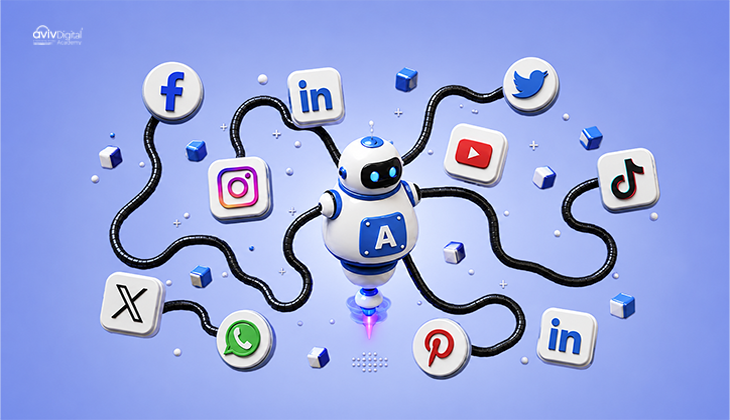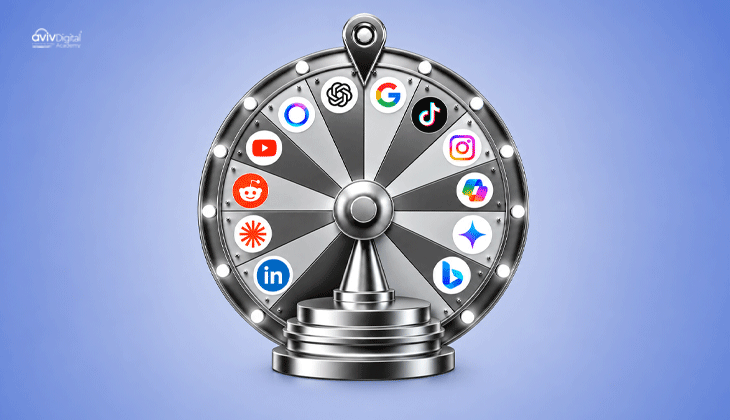
Search Everywhere Optimization (SEO) is the practice of optimizing a brand’s visibility across every platform buyers use during a purchase journey, not just Google Search. Buyers now discover products on TikTok, research specifications on Google, verify claims on Reddit, and take a final recommendation from AI assistants like ChatGPT or Google AI Overviews, often within a single decision cycle. A brand visible on only one surface is effectively invisible on the other four.
That shift changes how marketing teams should allocate budget and measure success. The old question was, “What is our Google ranking?” The new question is “Are we the answer, wherever our buyers happen to be looking?” This guide explains the search everywhere optimization framework behind that question, breaks down the five surfaces buyers actually use, and gives you a practical playbook you can start applying this week.
Why Search Stopped Being One Channel
Search did not disappear. It multiplied.
For two decades, search marketing meant one thing: rank on Google, ideally on page one. That assumption is now false, and the numbers back it up. Traditional search engine volume will drop 25% by 2026 as queries move to AI chatbots and other virtual agents.
The shift is not that people stopped searching. They search more, in more places, and with more intent. The change is where the searching happens. A person planning a weekend trip might watch a TikTok for ideas, search Google for hotel options, open Reddit to read what locals actually think, and then ask ChatGPT to compare three shortlisted places and pick one. That is four surfaces in a single journey, and a brand that ranked only on Google missed three of them.
This is what search everywhere optimization addresses. It treats every platform as one touchpoint in a single buyer journey rather than as a separate channel to manage in isolation. The goal is not five disconnected campaigns. It is one consistent answer, shaped to fit each surface.
The Five Surfaces Buyers Actually Use
Most buying decisions now touch several platforms. The five that matter most in 2026 break down cleanly by intent, and each one rewards a different kind of presence.
Google: Research & Comparison
Google remains the default for general research and comparisons. Buyers use it to understand their options, compare features, and check prices. It offers the widest reach, but competition is intense, and AI-generated answers are increasingly appearing alongside traditional search results.
TikTok: Discovery
TikTok has evolved into a powerful discovery engine for products, restaurants, travel, and services. Users often discover something without actively searching for it, making TikTok particularly valuable for consumer brands looking to create demand.
YouTube: Trust & Evaluation
YouTube dominates how-to, tutorial, and review content. Buyers who are closer to making a decision often watch detailed reviews or demonstrations before committing, making YouTube more than an awareness channel; it can be a major trust-building surface.
Reddit: Verification
Reddit is often used to validate a decision. Buyers look for candid experiences and opinions from people who appear to have no commercial incentive. Its discussions can also influence AI-generated answers when assistants draw on community perspectives.
AI Assistants: Recommendation
AI assistants represent a newer search surface. Rather than presenting a long list of links, they can synthesize information and give users a shortlist, recommendation, or verdict. For brands, being included in that recommendation can be especially valuable because users may not need multiple clicks to reach a decision.
AI assistants already drive a meaningful share of brand discovery, and that share is growing quickly. The practical takeaway is not to pour more budget into every platform. It is to map where your own audience actually asks questions before you allocate a single rupee. If your buyers ask, “Is this worth it?” on Reddit and “Show me how it works” on YouTube, then those are the two surfaces that deserve your content budget first. Defaulting to “just do more Google SEO” is the easiest way to keep spending money on the one place your audience has already moved past.
Here is the same journey condensed into a single comparison:
| Surface | Primary intent | What it rewards | Best format | Optimization focus |
| Research and comparison | Authority, relevance, clarity | Blog posts, service pages, FAQs | Structured data, direct answers, fast pages | |
| TikTok | Product and service discovery | Native, engaging short video | 15- to 60-second clips | Keywords in captions and spoken audio |
| YouTube | How-to and reviews | Useful long-form watch time | Tutorials, reviews, explainers | Titles, descriptions, chapters |
| Verification | Honest, detailed discussion | Threads and comments | Genuine participation, no hard selling | |
| AI assistants | Final decision | Relevance plus brand mentions | Structured, citable answers | Extractable Q&A, consistent claims |
Your Social Content Is Now Search Content
For years, marketers filed social media under “engagement” and search under “SEO,” as if they were two separate jobs. In 2026, that line has blurred. Google has spent years building generative answers directly into Search, and it is increasingly folding social content and its performance into its own search tooling, which means a strong social post can now behave like an indexed answer.
The practical implication is bigger than it sounds. A short video that answers a real customer question is no longer just feed content. It is a search asset. It can surface inside a platform search, get quoted in an AI overview, and reinforce the same answer you publish on your blog.
The most useful distinction to make is between scroll content and search content.
Scroll content is built to entertain in the moment. It is the meme, the trend, the behind-the-scenes clip. It earns views and awareness, but it rarely answers a question a buyer is actively trying to solve.
Search content is built to answer. It is the “How to Choose the Right Plan for Your Business” video, the “Three Things to Check Before You Buy” carousel, and the “We Tested This So You Do Not Have To” post. Search content gets found weeks and months after it is published, because it matches a query someone is still typing.
Both have a place, but they are not interchangeable, and they should not share one budget line. A useful lightweight workflow is to mine the real questions your audience asks, then turn each question into one piece of search content on one platform at a time. Start with a single platform where your audience is active, answer the question properly, and only then adapt that same answer to the next surface. This keeps quality high and prevents the common trap of posting five thin versions of one idea, a shift we unpack further in our post on how AI is changing the rules of social media.
How AI Assistants Actually Choose What to Recommend
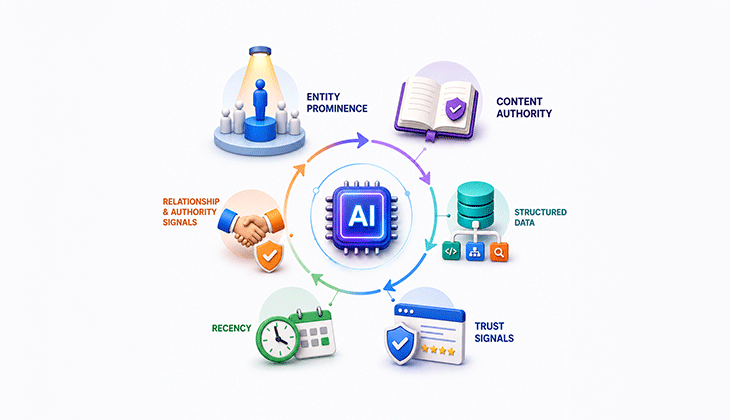
The single most important shift in this whole conversation is a change in output. A traditional search engine returns a ranked list. An AI assistant returns a verdict. When someone asks which agency to hire or which software to buy, the assistant does not offer ten options to click through. It names a small number, often one, and explains why.
That changes the goal. Classic SEO asks, “How do we rank first?” The question of how to rank in AI search engine results has no ladder to climb. Generative engine optimization, the GEO strategy 2026 runs on, asks something harder: “How do we become the answer?”
Three factors shape what an assistant recommends, in this order of practical importance.
1. Topical Relevance
AI assistants prioritize content that directly, clearly, and completely answers the question. Pages that get to the answer quickly have an advantage over content buried beneath lengthy introductions, ads, or unnecessary company history.
2. Brand Mentions Across the Web
The frequency, consistency, and tone of brand mentions across independent sources can shape how AI systems understand a brand. Forums, review sites, industry publications, and social platforms can all contribute to a brand’s broader online presence.
3. Backlinks Still Matter – But Differently
Backlinks remain important for traditional Google rankings, but their role in AI recommendations may be different. Emerging evidence suggests that relevance, source credibility, and the quality of on-page information may matter more than backlinks alone when AI systems decide which brands or sources to surface.
One claim worth treating carefully is that AI-referred traffic converts several times higher than traditional organic traffic. It is plausible, and it is repeated often, but the supporting data is still thin and early. What is safer to state is that AI-referred visitors arrive with high intent, because the assistant already did the filtering for them.
The actionable recommendation follows directly from this. Prioritise one deep, well-sourced piece of content over ten shallow ones. One genuinely complete answer, kept accurate over time, gives both an assistant and a human reader something worth citing. That is how AI search visibility is actually built. It is the same pattern we document in our comparison of AI SEO versus traditional SEO and in our breakdown of brand visibility in AI search, where a single complete answer outperforms a dozen shallow ones every time.
Turn One Answer Into Every Format
The most efficient brands in 2026 do not run five disconnected campaigns. They produce one well-researched answer, then reshape it into every format the journey requires.
The chain usually looks like this. Original research or a first-hand test becomes a blog post. The blog post becomes a video. The video becomes short-form clips for TikTok and YouTube Shorts. Each piece carries the same core answer and the same numbers, because the numbers are the part that gets quoted.
Consistency is the quiet ranking factor here. When a brand says one thing in a blog post, a slightly different thing in a video, and a third thing in a Reddit thread, the contradictions make both readers and AI systems less confident. An assistant that finds two conflicting versions of your claim cannot cite either one. When every format repeats the same verified answer, the brand reads as reliable, and reliability is what gets recommended.
This repurposing chain is also the most practical answer to the “we do not have budget for every platform” objection. You are not creating five new ideas. You are expressing one idea five ways. The research cost is paid once; the distribution is the part that scales.
How to Optimize Search for All
Optimizing for search everywhere does not mean running five separate SEO programs. It means applying a small set of platform-specific habits on top of one consistent answer. Here is what optimization looks like on each surface.
- Google: The fundamentals still matter, but the payoff has changed. Clear headings, fast pages, and structured data help Google understand what your page is about, and that is exactly what lets it quote you inside an AI overview. Write the direct answer in the first two sentences of any page, and mark up FAQs and how-to content where your site still qualifies.
- TikTok: Optimization is invisible to the casual viewer but decisive to the algorithm. Put the searchable phrase in your caption and in the first few spoken words of the video, because TikTok now indexes audio as well as text. Answer one question per video instead of squeezing three ideas into fifteen seconds.
- YouTube: The title and description still do the heavy lifting, but chapters and a clearly spoken answer now matter more as YouTube results surface inside Google and AI answers. Name the question in the first line and answer it early in the video.
- Reddit: There is no algorithm to game, and trying will backfire. The optimization is participation: a founder or team member who genuinely answers questions in relevant subreddits builds the mention trail that AI assistants read. Do not open with a link to your own site.
- AI assistants: The goal is to be quotable. Keep every claim consistent across your site, add a plainly worded question and answer to your service pages, and make sure the page that answers a question states the answer up top. The assistant is looking for the single clearest source, so give it one.
Tips to Implement Search Everywhere Optimization
These habits turn the framework into a weekly routine rather than a quarterly project.
- Audit where you already appear: Before you create anything new, search your brand name and your top five buyer questions on each surface and note what comes back. The gaps are your content calendar.
- Add one question and answer to every important page: A short FAQ block written in plain language gives both a human reader and an AI assistant the extractable answer they want. It is the cheapest visibility win available.
- Keep one source of truth for every number: Price, timing, and a case study result; store it in one document and point every platform at it. When your video, blog, and sales page all agree, you become the safe thing to cite.
- Check your AI mentions monthly: Prompt ChatGPT, Gemini, and Perplexity with your buyer questions, and note whether you are named. Do it manually first; dedicated AI-visibility trackers are still maturing, so adopt one only when you have enough volume to justify it.
- Refresh before you multiply; A short answer that is wrong, or a statistic that is a year old, spreads faster than a correct one. Update your core piece before you adapt it to a new surface, so every version inherits the corrected number.
Common Mistakes to Avoid
Most search everywhere optimization failures come from a handful of repeated errors. Avoid these, and you are ahead of most brands.
- Treating every platform as a separate campaign: When Google, TikTok, and Reddit each get a different claim, price, or tone, you split your own signal. AI systems see the contradiction and decline to cite any of it.
- Chasing volume over answers: Publishing ten shallow posts is easier than researching one deep one, but shallow content does not get cited and does not get remembered. One complete answer outperforms a dozen thin ones.
- Hard selling on community platforms: Reddit and forums punish self-promotion, and users can spot a planted post instantly. The brands that win answer questions first and mention their product only when it genuinely fits.
- Ignoring AI answers until they hurt: Most teams only notice generative search when a competitor starts appearing in the answers they were used to owning. Checking monthly costs for an hour and catching the shift early.
- Renaming the same effort: “Search everywhere” optimization is not a new label for the old Google-only playbook. If your only measurable action is still your Google ranking, you have not started.
What This Means for Your Search Strategy in 2026
If you take one thing from this guide, take the shift from ranking to being the answer. Here are four steps you can act on this week.
1. Map Your Buyer’s Journey
Identify the platforms your customers actually use at every stage—from first discovery to final decision. Then identify where your brand is currently absent and prioritize those gaps.
2. Separate Scroll Content from Search Content
Treat social and discovery-focused content differently from search-driven content. Give search content the same strategic attention you would give a page designed to rank on Google.
3. Build One Deep Answer First
Instead of creating dozens of thin pieces, start with the single question your best customers ask most often. Answer it thoroughly in one strong format, then adapt that core content for other platforms and formats.
4. Make Consistency a Rule
Keep your claims, prices, statistics, product details, and brand information consistent across every platform. This discipline makes your brand easier for both people and AI systems to understand and reference.
Search has fragmented, but the brands that win are not the ones running around trying to be everywhere at once. They are the ones that pick their surfaces deliberately, answer questions properly, and repeat one consistent message until they become the answer. That is the whole of search everywhere optimization, and it is a strategy our team applies for clients every week. If you would like help building a GEO strategy for 2026 that covers your actual buyer journey, talk to our digital marketing team, and we will map it with you.
Conclusion
Search everywhere optimization is not a bigger budget line; it is a discipline. One verified answer, adapted to every surface, kept identical in every format, and checked against what the AI assistants actually say about you. The platforms will keep shifting, but the underlying rule does not: the brand that is the clearest, most consistent answer is the one that gets found, cited, and recommended.
Start with the audit, add a question and answer to your most important page, and check your AI mentions next month. The rest builds from those three habits.
Aviv Digital Academy is one of the leading Digital Marketing Course in Calicut. We offer a wide variety of globally recognized certification programs that include SEO, SEM, SMM, Email Marketing, and Inbound Marketing courses. For more details, Contact Us at: +91 8156998844
Frequently Asked Questions
What is Search Everywhere Optimization?
Search Everywhere Optimization is the practice of making a brand discoverable and trustworthy across every surface buyers use to research, from Google, TikTok, YouTube, and Reddit to AI assistants, rather than optimizing for Google alone. It treats each platform as one touchpoint in a single buyer journey instead of a separate channel.
How is GEO different from traditional SEO?
Traditional SEO optimizes for ranking positions on a search results page. GEO, or Generative Engine Optimization, optimizes for being cited or recommended inside an AI assistant’s single generated answer, where factors like brand mentions across the web and topical relevance matter more than backlink volume.
Which platforms matter most for search visibility in 2026?
It depends on the buyer journey, but most businesses now need a presence across Google, one short-form video platform such as TikTok or YouTube Shorts, a community platform like Reddit, and visibility in AI assistant answers, since buyers typically use several of these in the same purchase decision.
Do backlinks still matter for AI search rankings?
Backlinks still matter for traditional Google rankings, but early evidence suggests they carry less weight in what AI assistants choose to recommend, compared to signals like consistent brand mentions across the web and direct relevance to the question asked.
How can a business track its AI search visibility?
Start by manually prompting AI assistants with the questions your buyers would ask and noting whether and how your brand appears. Dedicated AI-visibility tracking tools are emerging, so evaluate one against your budget rather than assuming any single tool is the market standard.
What is the difference between AEO vs SEO?
SEO, or search engine optimization, is built around ranking in a list of results. AEO, or answer engine optimization, is built around being the answer itself, whether that answer appears in a featured snippet, a voice reply, or an AI-generated recommendation. The two overlap, but AEO treats the single-answer output as the thing you are competing to win.