The advertising landscape has shifted dramatically over the past few years. What was once dominated by static images- simple, straightforward, effective- now competes with a flood of video content, particularly short-form videos like Instagram Reels. Brands are struggling with a fundamental question: should they pour resources into crafting the perfect static-image ad or invest in video production? The answer isn’t straightforward. Both formats have their place, and the real performance gap depends on your audience, product, and how well you execute each approach. Let’s dig into what the data actually shows about conversion rates, engagement metrics, and when each format truly shines.
Understanding the Formats: What We’re Comparing
Static images remain the workhorse of digital advertising. A single compelling photograph, graphic, or illustration paired with copy is the format that built modern performance marketing. Facebook ads, Google Shopping ads, and LinkedIn-sponsored content- much of the digital ecosystem still runs on static imagery.
Reels, by contrast, represent the video-first evolution. Launched by Instagram as a direct competitor to TikTok, Reels are short-form videos typically under 90 seconds. They’ve expanded to other platforms (Facebook, YouTube Shorts), and as of 2026, they’ve become central to how people discover products and brands. The key difference isn’t just motion versus stillness. It’s about storytelling depth, engagement speed, and the cognitive processing required from viewers.
It’s worth being precise about what’s actually being compared here. Inside Meta Ads Manager, this comparison plays out across three concrete ad units: Reels ads (full-screen, vertical video placements in the Reels feed), single-image ads (a static photo or graphic shown in Feed, Stories, or Explore), and carousel ads (a swipeable sequence of static images or videos). When advertisers debate “Reels vs. static images,” they’re really deciding how to split the budget across these specific placements, not just picking a creative style in the abstract.
The Performance Data: What Actually Converts
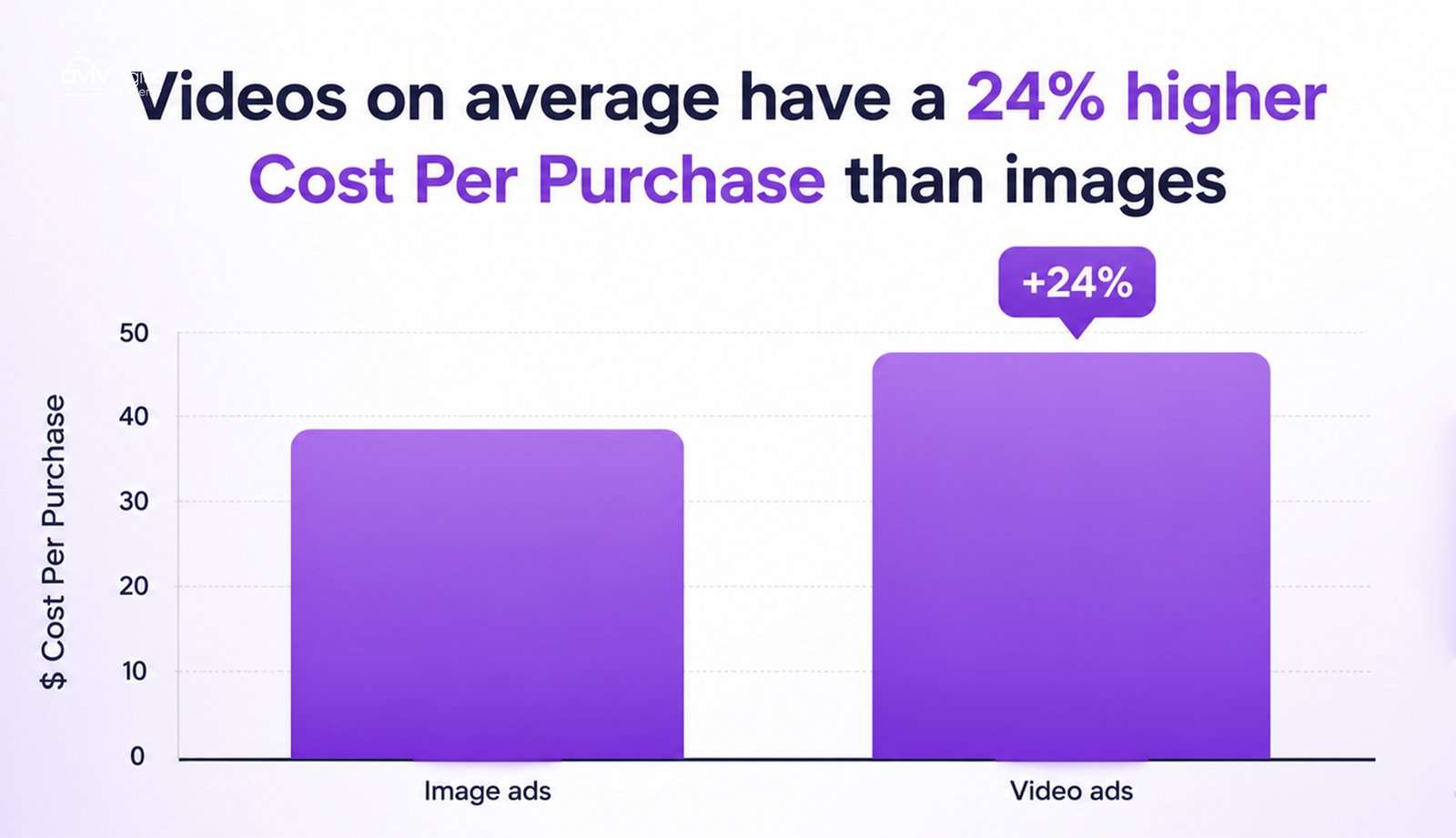
Here’s where things get interesting. The blanket statement “video converts better” is misleading. The reality is more nuanced.
Engagement metrics favor video decisively. Reels generate approximately 3-4x higher engagement rates than static images on Instagram, Facebook, and YouTube. Users are more likely to like, comment, and share video content. On average, Reels capture 1.0% to 3.0% engagement rates on brand accounts, while static images typically achieve 0.5% to 1.0%.
But engagement isn’t the same as conversion.
Conversion performance tells a different story. According to data from major ad networks and brand-run tests in 2025-2026, the conversion winner depends heavily on the product category and the conversion funnel stage.
For direct-response campaigns (immediate purchases, signups, and downloads), static images often outperform Reels by 15-30%. This happens because:
- Users can instantly see the product or offer without waiting for the video to play
- Clear, focused images reduce cognitive load
- The friction from video playback (especially on mobile) creates abandonment
- Simpler design means faster decision-making
For awareness and consideration, Reels win substantially. They generate 40-60% higher conversion rates to content (clicks to blogs, video views, and saves) compared to static ads.
When Static Images Dominate
Static images outperform Reels in several specific scenarios:
- E-commerce impulse purchases: If you’re selling something with clear visual appeal- fashion, home goods, or beauty products- customers want to see the product instantly. An image of a beautiful jacket, a modern lamp, or a new skincare bottle conveys the core message immediately. Reels require 2-5 seconds of video watching before the product becomes clear.
- High-consideration products: For products where purchase involves research, software tools, courses, services, or static images with clear value propositions outperform video. Users want to read comparisons, features, and pricing before engaging deeper. A clean image with strong copy serves this need better than a Reel.
- Performance marketing with tight budgets: Static image ads have predictable CPC (cost per click) and CPA (cost per acquisition) because the format has been optimized for years. Reels, still evolving as an ad format, have higher production costs and less predictable performance, especially for niche audiences.
- Audience segments that value efficiency: Older demographics (45+), B2B audiences, and professionals often respond better to straightforward static ads. They represent decision-makers accustomed to traditional advertising formats.
When Reels Capture the Advantage
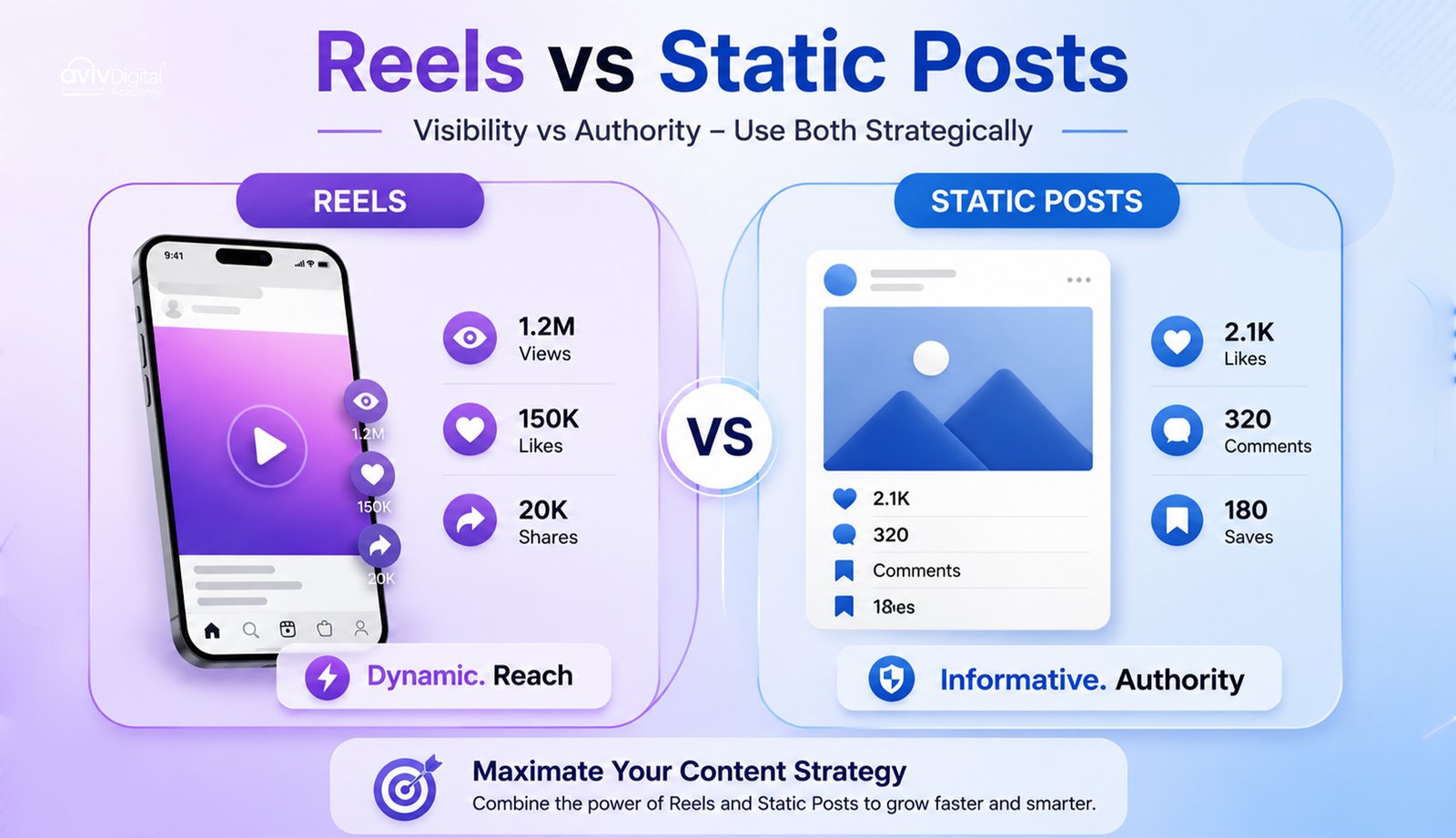
Reels and video formats genuinely convert better in other contexts:
- Building brand awareness and trust: Video humanizes your brand. Showing your founder, team members, or customer testimonials creates emotional connection. Reels do this 3-4x more effectively than static images.
- Complex products requiring explanation: Software features, technology products, or services with multiple steps benefit from video explanation. A reel demonstrating workflow is more convincing than describing it in static image copy.
- Younger demographics: Users under 35 increasingly prefer consuming information via video. They trust Reels more than static ads, and they’re more likely to watch through completion. Conversion rates for 18-34-year-olds favor Reels by 25-45% depending on the product.
- Trends and timely offers: Reels feel current and authentic. Limited-time offers, seasonal promotions, and trend-based campaigns perform 30-50% better as Reels because they align with how people consume timely information.
- Social proof and FOMO activation: User-generated content, customer testimonials, and “behind-the-scenes” content formats that build social proof- perform better as Reels. The video medium naturally conveys authenticity.
A Comparison Table: Quick Reference
| Factor | Static Images | Reels (Short Videos) | Winner |
| Immediate product clarity | Product visible instantly | Depends on the first few seconds. | Static Images |
| Production cost | Low | Higher (shooting, editing, audio) | Static Images |
| Mobile scroll-through speed | Easy to consume | Requires users to stop scrolling | Static Images |
| E-commerce impulse buys | Great for quick purchase decisions | Better for discovery than instant buying | Static Images |
| Engagement rates | Lower | Much higher likes, comments, and shares | Reels |
| Emotional connection | Limited | Music, voice, and movement create stronger emotions. | Reels |
| Younger audience appeal | Moderate | Highly preferred by Gen Z & Millennials | Reels |
| Brand storytelling | Limited | Excellent for narratives and brand personality | Reels |
| Complex product explanation | Difficult | Can demonstrate features and use cases | Reels |
| Video testimonials/reviews | Not possible | Authentic customer experiences build trust. | Reels |
Practical Strategies: How to Test Both
Rather than betting everything on one format, successful brands run split tests. Here’s a practical approach:
1. Start with your product category. E-commerce? Test static images first. Service-based? Reels first. Allocate 60% of budget to your strength and 40% to test the weaker format.
2. Measure the right metrics. Don’t optimize for engagement alone. Track ROAS (return on ad spend), CPA (cost per acquisition), and actual revenue. A reel with high engagement but low conversion isn’t worth the production spend.
3. Test across audience segments. Create age-based audiences (18-24, 25-34, 35-54, 55+). You’ll likely find static images perform with older viewers and Reels with younger ones. Allocate spending accordingly.
4. Combine formats for funnel optimization. Use Reels to drive awareness (top of funnel), then retarget viewers with static image conversion ads. This two-step approach captures both engagement and conversion benefits.
5. Learn from competitor patterns. Check what your competitors are running. If competitors in your niche predominantly run static images, there’s likely a reason tied to your customer base.
Production Cost Reality
One often-overlooked factor: production economics.
A high-quality static image requires a photography session or design work (2-6 hours), copywriting (1-2 hours), and testing variations (2-3 designs). Total cost: $300-$1,500 depending on quality.
A professional reel requires scripting, video shooting, editing, music/sound design, and color grading. Total cost: $800-$5,000 per reel for quality production.
If your conversion rate lift from Reels is only 10-15% over static, the production cost is hard to justify. The ROI needs to be 3-5x better to offset higher production costs.
The Verdict for Different Business Models
- Direct-to-Consumer (D2C) Brands: 70% static images, 30% Reels. Static dominates for conversion, but Reels build essential brand awareness.
- B2B SaaS: 80% static images, 20% Reels. Professional audiences prefer clarity and efficiency. Use Reels for thought leadership, not product promotion.
- Fashion & Beauty: 50% static, 50% Reels. Both formats work equally well. Reels showcase styling; static images show the product clearly.
- Service-Based Businesses: 40% static, 60% Reels. Video testimonials and process documentation are your strongest conversion drivers.
- Food & Beverage: 30% static, 70% Reels. Food is inherently visual and dynamic. Reels showing preparation, consumption, or satisfaction patterns drive strong conversions.
The LinkedIn Exception
LinkedIn is a notable exception to the common “video wins reach” trend seen on many consumer platforms. For B2B lead generation, static image, carousel, and especially document-style educational creatives often perform as well as or better than short-form video, particularly for driving qualified clicks and lead form submissions. Professionals scrolling LinkedIn are frequently evaluating information quickly rather than looking for entertainment, so creative content that communicates a clear business value immediately can outperform video that requires 15–30 seconds of attention. If your B2B SaaS budget is split across Meta and LinkedIn, it often makes sense to lean toward static, carousel, or document creatives on LinkedIn while using Reels and short-form video more heavily on Meta. The best approach is to validate this with platform-specific A/B testing rather than assuming one format will always win.
Budget-Tier Recommendation: How Much Should You Spend Where
| Monthly Ad Spend | Recommended Split | Why |
| Under ₹25,000 | 80% Reels / 20% Static | At this spend level you can’t buy enough impressions to run two well-powered tests at once. Lean into Reels to build reach and an initial warm audience; keep a small static budget for basic retargeting only. |
| ₹25,000 – ₹100,000 | 60% Reels / 40% Static | Enough budget to properly split-test. Use Reels for cold-audience prospecting and static for retargeting the warm traffic Reels generate. |
| ₹100,000+ | Data-led, typically closer to 50/50 | At this scale, you should have enough conversions to measure your own CPA by format and funnel stage rather than following a generic split; use the ratio your own data supports. |
Conclusion
The format that converts best isn’t predetermined. It’s determined by your product, your audience, and your execution quality. Static images will never disappear. They’re efficient, cost-effective, and predictable for certain conversion types. Reels aren’t a replacement; they’re a complement, especially for building awareness and emotional connection. The winning strategy in 2026 isn’t to choose one. It’s to understand which format serves each stage of your funnel, test both, and allocate budget based on replacement performance data. Start with what works for your category, then systematically test alternatives. The brands outperforming their competitors aren’t choosing sides. They’re using both tools strategically, measuring real conversion impact, and adjusting based on results. That’s the actual competitive advantage.
Aviv Digital Academy is one of the leading Digital Marketing Courses in Calicut. We offer a wide variety of globally recognized certification programs that include SEO, SEM, SMM, email marketing, and Inbound Marketing courses. For more details, Contact Us at: +91 8156998844
FAQ
Should I stop running static image ads if I’m not seeing Reel success?
No. Different audience segments respond to different formats. Test both, measure independently, and allocate budget based on ROAS, not just engagement metrics.
How long should my Reels ads be?
15-30 seconds is optimal. Shorter Reels (10-15 seconds) get better completion rates, but 30-second Reels allow for better product explanation. Test both ranges.
Can I use the same Reel script for different platforms?
Not effectively. Instagram Reels, YouTube Shorts, and TikTok have different audience expectations and optimal aspect ratios. Adapt your concept for each platform.
What’s the ideal image size and format for static ad images?
Square (1200×1200) for most platforms, 4:5 ratio for Stories, and 16:9 for desktop. Always test multiple aspect ratios; performance varies by platform.
Is AI-generated video content (like avatar videos) converting well in 2026?
Not particularly. Consumers increasingly distrust AI-generated content and prefer authentic human creators. Stick with real people or high-quality production, not synthetic video.